
Locality and symbolic imagery. A research visit in the archive of Antoni Halor
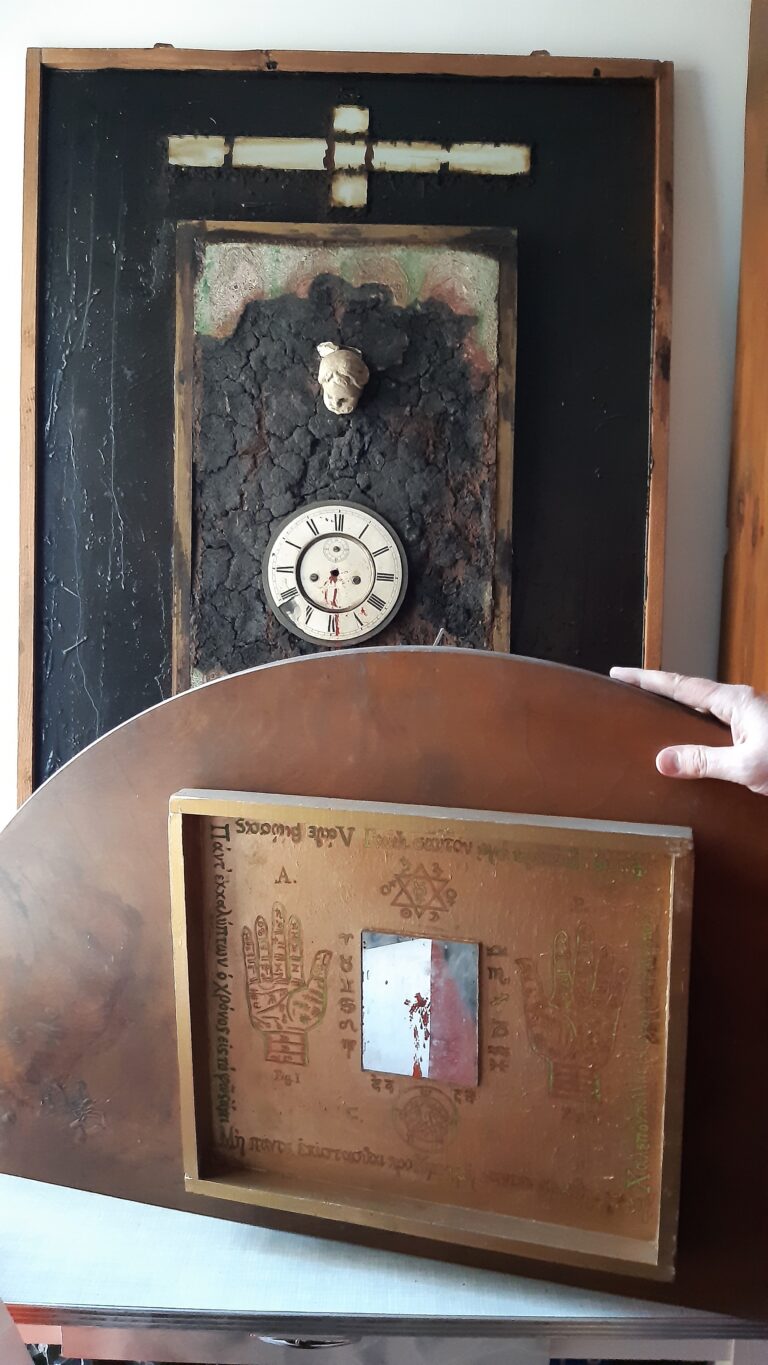
The next artist whose work we are looking at more closely is Antoni Halor (1937–2011). At the end of January, we visited his archive, which was made available to us by the artist’s son. Halor is primarily known as a film and television director, but before beginning his studies at the Polish National Film, Television and Theatre School in Łódź, he graduated from the Academy of Fine Arts in Kraków in 1965. His early painting and film work from the early 1960s was associated with the Katowice-based Oneiron group, whose members shared an interest in Western esotericism, magic, occultism and Far Eastern religions. However, Halor never identified himself spiritually with any of them. He treated alternative forms of spirituality primarily as a valuable part of humanity’s intellectual heritage, which was also the starting point for his own theory of art. According to it, the “greatest weapon” of art is “symbolic imagery,” whose uniqueness lies in “connecting consciousness with the unconscious, the rational with the irrational, thought and reality, the micro and the macrocosm.” He also attributed special significance to the symbolism of color, “immersed […] in the dark abyss of the unconscious.” In his theoretical writings from the 1980s dedicated to these issues (Treatise on Color, An Introduction to the Golden Age, and Cinema and Symbol), he referenced among others Goethe, Jung, different cosmogonic myths, and alchemy. A recurring motif in his paintings and drawings was mount Meru, the mythical axis mundi in Buddhist and Hindu cosmology.
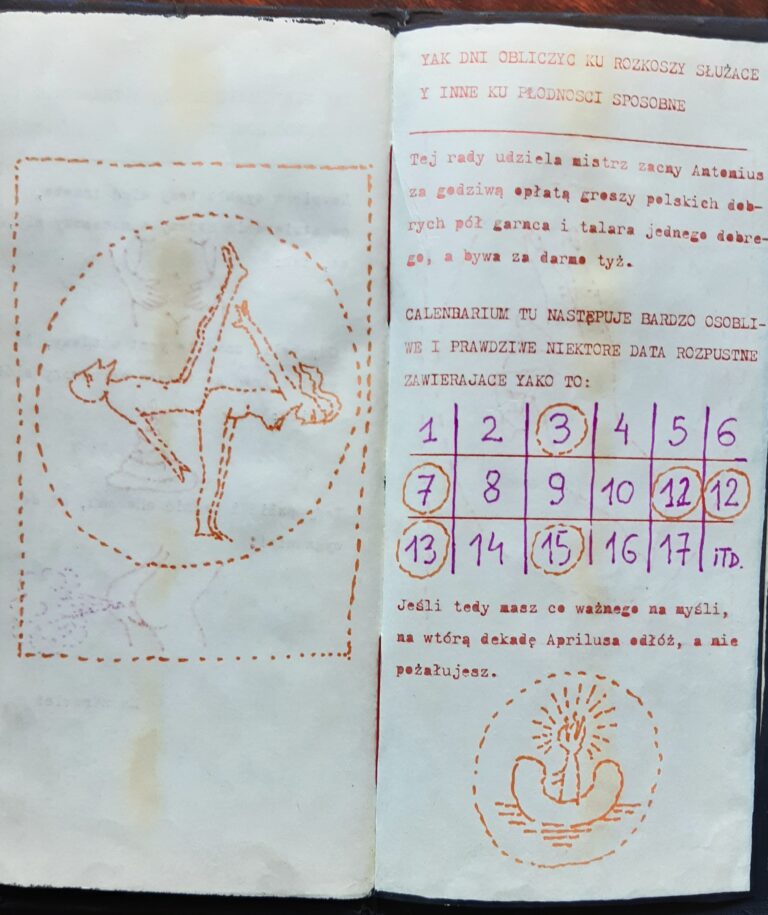
In his paintings, the mysticism of matter—rooted in the Upper Silesian sensitivity shaped by the industrial and mining landscape that was particularly close to Halor—meets with the realm of spirituality. From the abstract and dark primal source of nigredo (the blackening stage in alchemy), a world of images and symbols emerges. Halor was also an outstanding graphic artist and illustrator, the author of art books that, with their rich ornamentation and refined execution, resemble medieval manuscripts filtered through the experience of the avant-garde. However, what occupied him the most and to which he dedicated a significant part of his life, was the study of the history and mythology of the region he came from – Upper Silesia; it was here that he found closest to his heart sources of mystery and the depth of time.
Gallery



![Zbigniew Makowski, This is how we open the square garden of sleep [Tak otwieramy ogród kwadratowy snu], 1963, oil on canvas, 90 x 70 cm © Zachęta – National Gallery of Art collection](https://alternative-spirituality-in-art.ihs.uw.edu.pl/wp-content/uploads/2025/02/700px-x-600px-–-10.jpg)
