
The light within us is one. Research on the legacy of Jerzy and Ewa Ćwiertnia
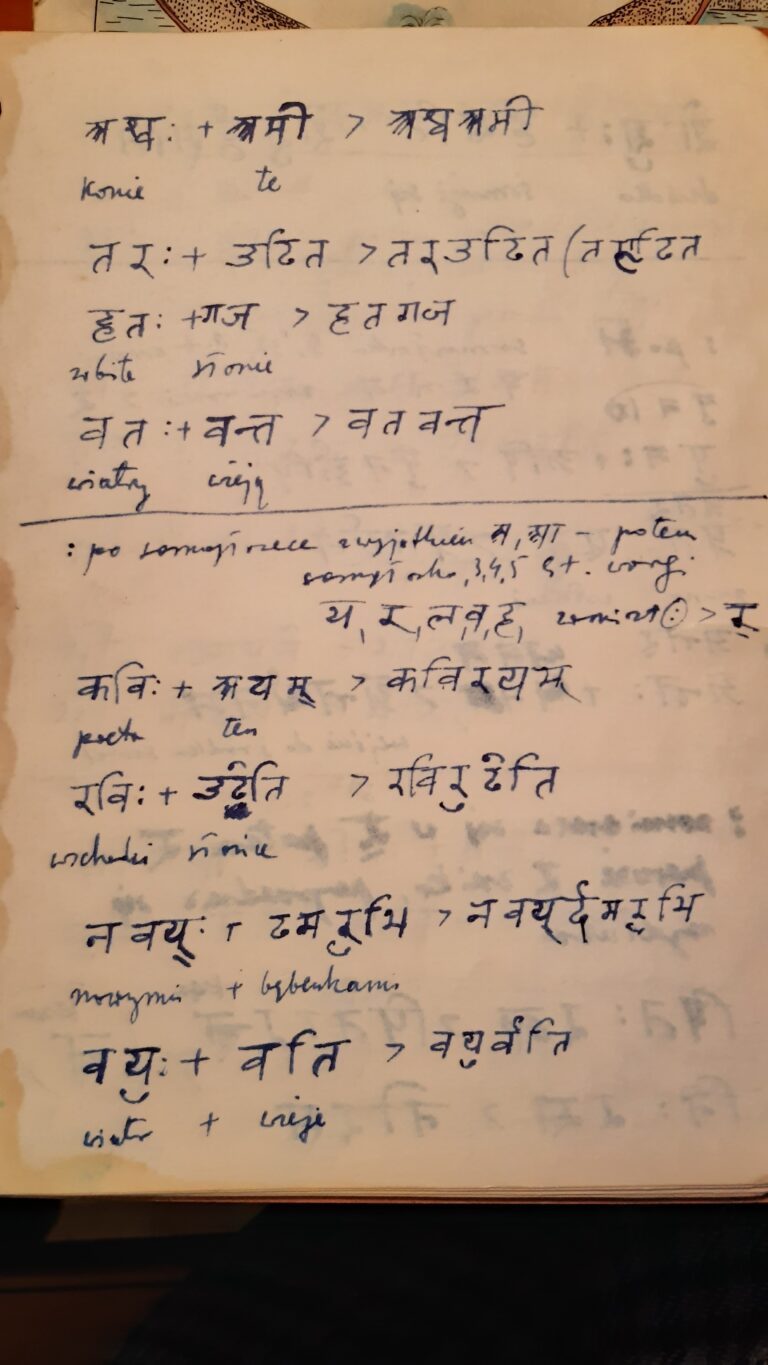
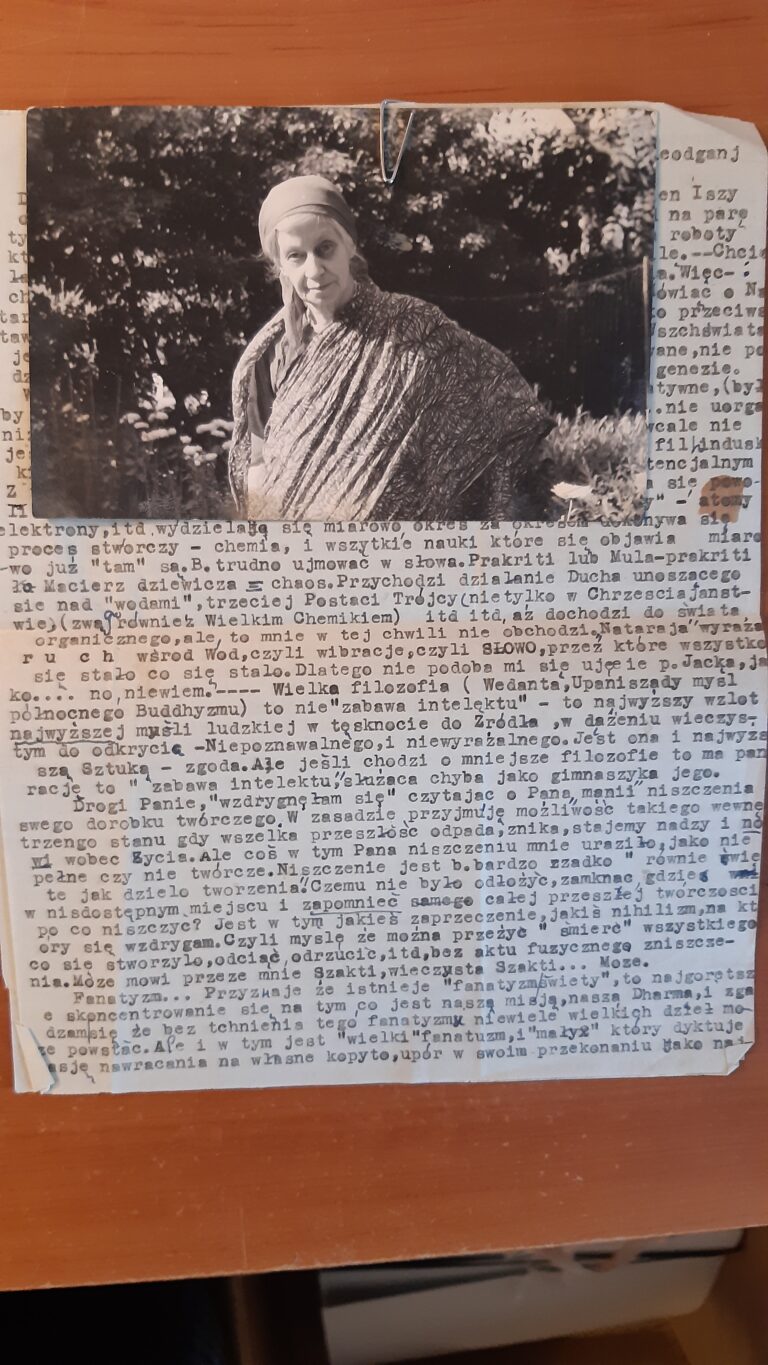
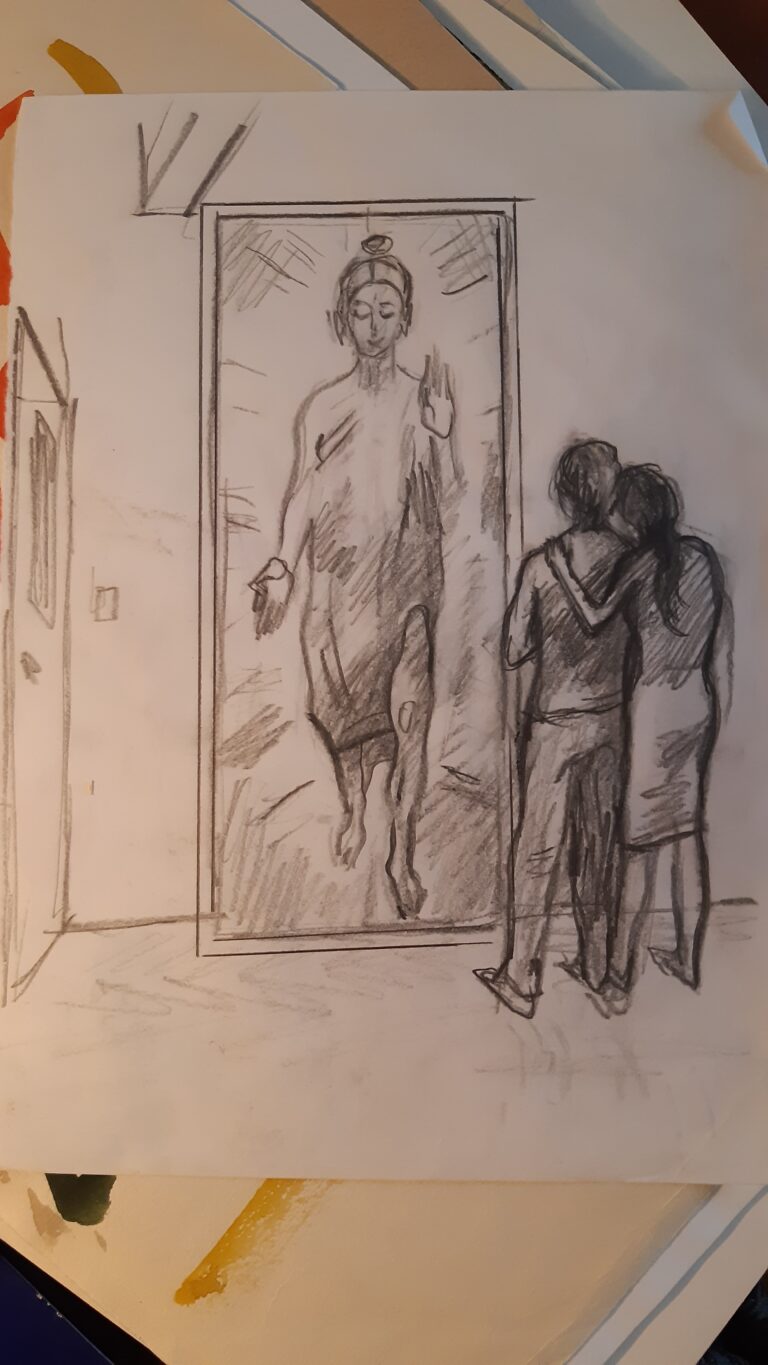
In November we completed our research visit at the Castle Museum in Sandomierz (Muzeum Zamkowe w Sandomierzu), where the legacy of Ewa (1951-1994) and Jerzy Ćwiertnia (1928-2009) is preserved. The collection includes not only dozens of drawings and paintings on canvas by both artists but also a rich archive of manuscripts. Among these, we were particularly intrigued by the unpublished autobiography of the artist, as well as Ćwiertnia’s reflections on art, successive drafts of notes which contribute to dialogues with his daughter (later published on the occasion of the On a Shared Path exhibition at the Sandomierz Museum in 1998), excerpts from readings, dream records, and letters—including a captivating correspondence with Wanda Dynowska (1888-1971) from 1966–1969/1970. Jerzy Ćwietnia was keen to ensure that the legacy of himself and his daughter remained intact and undivided, much like the inseparable nature of their artistic endeavors. Both artists identified as “Hindu Buddhists.”
Jerzy Ćwiertnia wrote about himself: “If someone asked me who I am—a painter? A poet? A philosopher?—I would answer: I could live without painting, without writing a poem, without reading philosophers, but I could not live without being a vegetarian.” After the authorities shut down the magazine ‘Po Prostu’—which he co-edited—in 1957, he withdrew from active artistic life for nearly a decade and immersed himself in intensive studies of Hinduism and Buddhism, including learning Sanskrit. In the Catholic weekly Kierunki, he published, among other works, an essay on yogi Maharishi, which was enthusiastically received by readers, as well as numerous articles and poems sensitizing people to the world of plants and animals.
Ćwiertnia’s intellectual and spiritual biography aligns avant la lettre with what is today called spiritual ecology, a field that seeks to restore humanity’s spiritual bond with nature. His pro-ecological stance is also reflected in his paintings, where his pursuit of a modern artistic expression intertwines with a deep belief in the unity of the universe and the experience of nature as a path to spiritual enlightenment. A particular role in his work is played by the mysticism of light, pointing to a consciousness shared by all being.
Although Ewa and Jerzy Ćwiertnia were critical of the Judeo-Christian tradition—seeing it as a source of Western civilization’s moral decline—they remained, at the same time, “cultural Catholics.” Their work reveals a constant struggle with local and Christian heritage, infused with the sensibilities of Eastern teachings. In black-and-white photographs from the mid-1960s, against the backdrop of vast native landscapes, Ewa can be seen dressed in a sari. Reflecting on her later works from the Crucifixion series, Ćwiertnia wrote:“Perhaps these are the first paintings of crucifixions in art history to be painted by a Hindu Buddhist since childhood.”
Gallery